If you are torn between a polished new build and a classic estate property, Pinecrest makes that choice especially nuanced. Here, the lot, landscaping, and zoning can matter just as much as the house itself. By understanding how Pinecrest’s housing stock, parcel sizes, and local rules shape each option, you can make a more confident decision. Let’s dive in.
Why this choice feels different in Pinecrest
Pinecrest is not a one-size-fits-all market. The village grew significantly in the 1950s and 1960s, and many homes still reflect that era, often on large lots with mature landscaping and open space. At the same time, newer homes and custom rebuilds continue to draw buyers who want updated systems and more modern layouts.
That mix creates a real decision point. In Pinecrest, you are often choosing between new construction convenience and mature estate character, with the lot itself playing a major role in what is possible now and in the future.
Pinecrest lots shape your options
A big reason this decision matters so much in Pinecrest is zoning and lot structure. Estate districts in the village are substantially larger than standard single-family districts, and each zoning category comes with its own rules for lot width, depth, setbacks, building coverage, and green space.
That means a property may look spacious at first glance but still have limits on what you can build or expand. If you are thinking about a pool, guest house, major addition, or custom rebuild, the buildable envelope matters just as much as the total lot size.
Lot sizes vary widely
Pinecrest includes both true estate parcels and smaller residential lots. The village code outlines a wide range of minimum lot sizes, from 2.5 gross acres in EU-1C districts to 7,500 net square feet in RU-1 and RU-2 districts.
Here is a simple snapshot of how that breaks down:
| District | Minimum lot size | Max building coverage | Minimum green space |
|---|---|---|---|
| EU-1C | 2.5 gross acres | 20% | 55% |
| EU-1 | 1 gross acre | 20% | 55% |
| EU-S | 25,000 gross sq ft | 30% | 35% |
| EU-M | 15,000 net sq ft | 30% | 35% |
| RU-1 / RU-2 | 7,500 net sq ft | 30% to 35% | 35% |
These numbers help explain why two homes in Pinecrest can feel very different even if they are priced in a similar range. One parcel may offer more room for a custom vision, while another may be better suited to living as-is.
Setbacks can reduce the usable footprint
Setbacks also affect how much of a lot you can truly use. Principal-building front setbacks are 50 feet in EU-1C and EU-1, 35 feet in EU-S, and 25 feet in EU-M, RU-1, and RU-2.
In practical terms, that can reduce the space available for your ideal floor plan or outdoor program. This is one reason careful property review matters before you assume a lot can support everything you want.
What new construction offers in Pinecrest
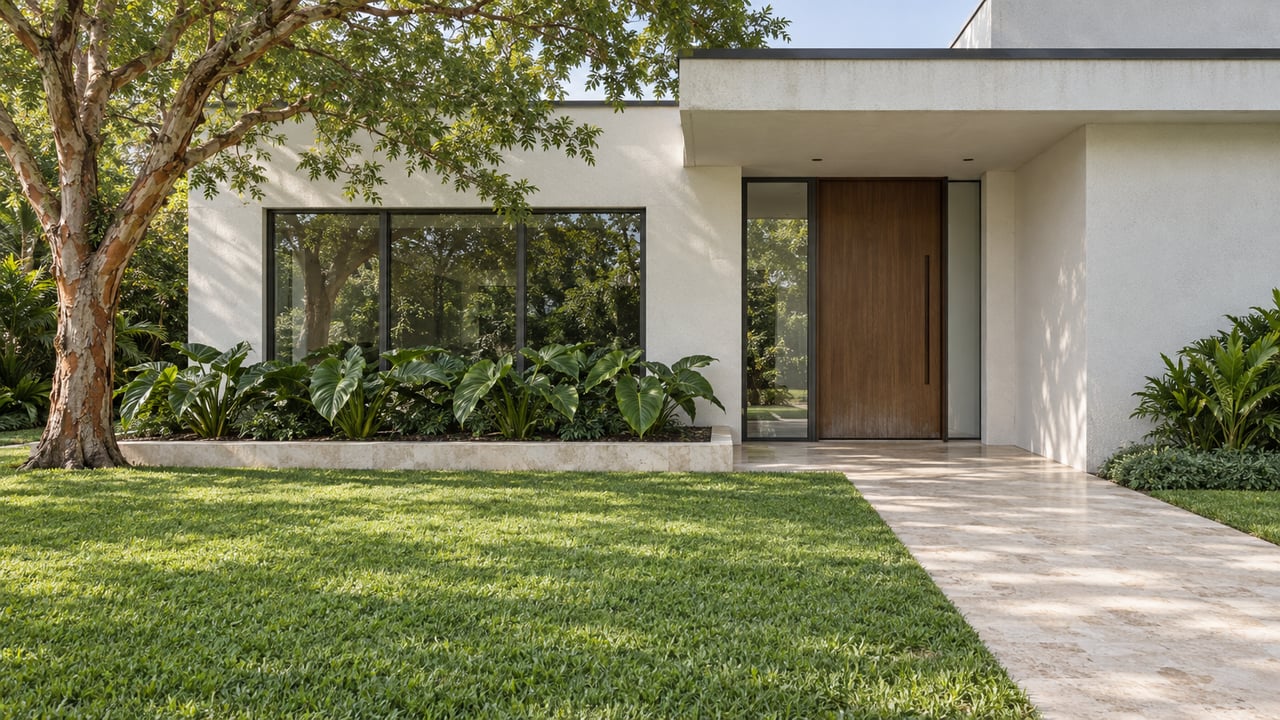
New construction appeals to many buyers because it can better reflect how people live today. Open layouts, current materials, updated mechanical systems, and more efficient planning are often at the top of the list.
In Florida, new residential buildings must follow current energy rules under the Florida Energy Conservation Standards and the Florida Building Code for energy conservation. Older homes are generally exempt unless renovations are extensive enough to trigger those standards. As a result, a new build may have a more direct path to efficient HVAC, building envelope, and water-heating performance.
Modern systems and design flexibility
If you want a home tailored to your lifestyle, new construction can be a strong fit. You may place more value on a floor plan designed around today’s preferences than on mature landscaping or older architectural details.
This can be especially appealing in Pinecrest, where buyers often want indoor-outdoor living, generous entertaining areas, and a property that feels move-in ready from day one.
A more involved approval process
That said, new construction in Pinecrest usually comes with a more complex path before move-in. The village states that most projects involving construction, enlargement, alteration, repair, demolition, moving, or replacement of electrical, gas, plumbing, or mechanical systems require permits.
Demolition, new construction, and changes to dimensions or appearance may also require design review. In addition, separate applications may be needed for grading, demolition, mechanical, electrical, and plumbing work.
The lot must match the vision
A key reality in Pinecrest is that wanting a new home is not enough on its own. The parcel must support the exact house program you want, including the structure, driveway, pool, outdoor hardscape, and required green space.
That is why buyers should look beyond broad labels like “oversized lot.” Width, depth, setbacks, and lot coverage rules often determine whether your plan is realistic.
What mature estate living offers
Mature estate living in Pinecrest has a different kind of appeal. Many buyers are drawn to established landscaping, a settled residential feel, and homes with architectural character that newer properties may not replicate.
Pinecrest’s history is closely tied to ranch-style homes on acre lots, and the area still reflects a broad architectural mix that includes ranch, midcentury-inspired forms, contemporary homes, and Mediterranean or Spanish-influenced estate styles. For many buyers, that variety is part of what makes Pinecrest distinctive.
Established landscape and character
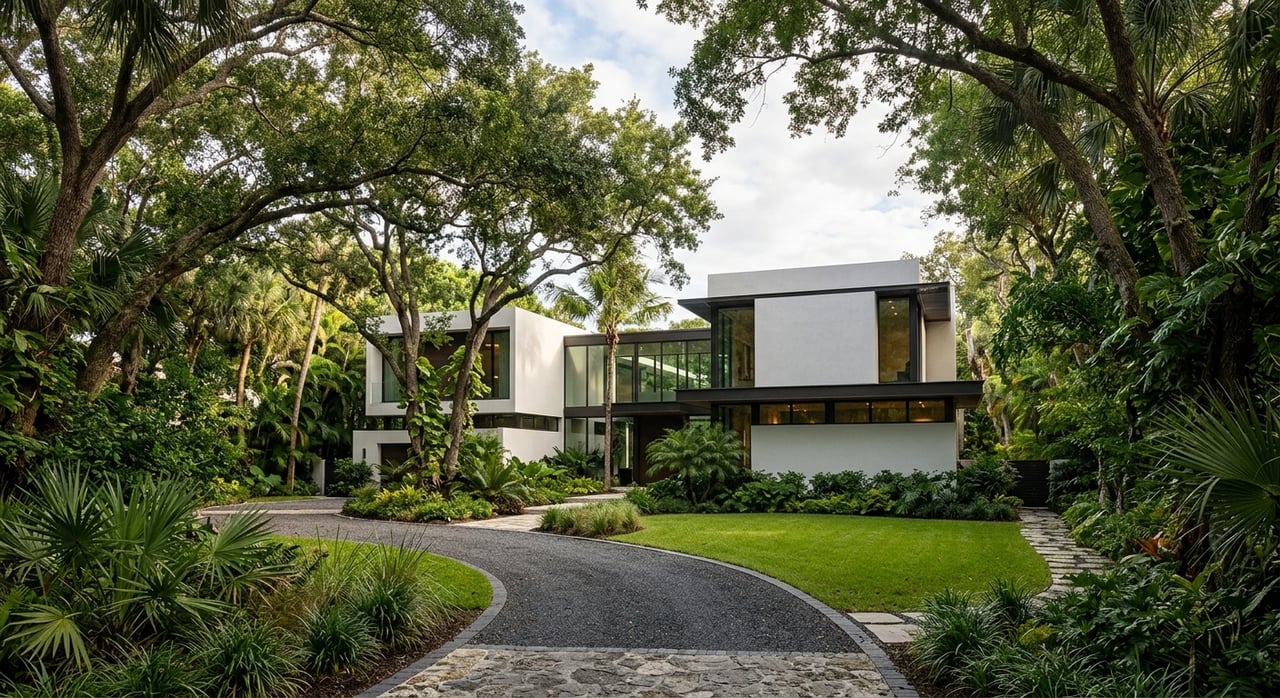
If you value mature trees, deep setbacks, and a landscape that has had decades to grow in, an older estate property can be hard to replace. Pinecrest’s strategic plan highlights large lots, abundant landscaping, open space, and a residential estate pattern that many residents continue to value.
There is also a practical lifestyle element here. A mature property may deliver an immediate sense of privacy, outdoor scale, and visual softness that takes years to develop on a newly built site.
More unknowns behind the walls
The tradeoff is that older homes often require closer review. Many Pinecrest homes were built before 1970, which can mean older roofs, windows, HVAC systems, plumbing, electrical systems, or layouts that may need updating.
If renovations become substantial, the project may enter permit and code-review territory. In some cases, Florida’s energy standards can also apply to the renovated building even if the original home predates modern code.
A useful local nuance
One important detail for Pinecrest buyers is that the village’s 30-year recertification cycle does not apply to single-family residences, duplexes, and minor structures. That makes older Pinecrest estates different from many older condo or multifamily properties elsewhere in South Florida.
This does not remove the need for due diligence, but it does help frame what ownership review may look like for single-family estate homes.
Due diligence that matters most
Whether you prefer new construction or a mature estate, Pinecrest rewards buyers who study the site as carefully as the home. In many cases, the biggest surprises are not in the finishes. They are in the land, drainage, canopy, and local permitting rules.
Tree rules can affect plans
Tree preservation is a serious local consideration. Miami-Dade County requires permits for the removal or relocation of trees that are not exempt, and specimen-size trees in single-family yards also require permits.
For buyers considering a remodel or expansion, that can affect cost, timing, and site planning. Trimming does not require a permit, but it must follow county standards.
Flood and drainage deserve early review
Flood and drainage checks should happen early in your property review. Pinecrest promotes floodplain management, provides a flood-zone viewer with elevation certificates, and notes active stormwater drainage projects aimed at reducing localized flooding.
Because many Pinecrest properties feature mature landscaping and substantial outdoor hardscape potential, site drainage, flood designation, and impervious coverage deserve a close look before you commit to a major renovation or rebuild.
How to decide which fit is right
If you are deciding between new construction and mature estate living in Pinecrest, your best answer usually comes down to priorities. Neither path is universally better. The right fit depends on how you balance design control, timeline, upkeep, landscape maturity, and tolerance for renovation or permitting complexity.
A few questions can help clarify the choice:
You may prefer new construction if...
- You want a home planned around current code and modern systems.
- You are comfortable with permit review, possible design review, and a longer timeline before occupancy.
- You care more about a tailored floor plan than established landscaping.
- You have confirmed the lot can support your full vision.
You may prefer mature estate living if...
- You value established trees, mature landscaping, and a settled residential feel.
- You are prepared to evaluate system age and likely renovation scope.
- You want architectural character, even if the home is less turnkey.
- You plan to check zoning, tree, flood, and drainage factors before assuming a major addition is feasible.
The bottom line for Pinecrest buyers
In Pinecrest, the house is only part of the story. The parcel, the setbacks, the tree canopy, and the buildable envelope often shape your lifestyle just as much as the square footage or finishes.
If you want clarity before you buy, it helps to work with an advisor who understands how Pinecrest properties function in the real world, not just how they look online. For tailored guidance on Pinecrest homes, estates, and new construction opportunities, connect with The Miami Signature Homes.
FAQs
What is the main difference between new construction and mature estate living in Pinecrest?
- New construction typically offers modern systems, current code compliance, and a more customized layout, while mature estate living often offers established landscaping, architectural character, and a more settled residential setting.
Why does lot size matter so much when buying a Pinecrest home?
- In Pinecrest, lot size is only one part of the equation. Width, depth, setbacks, building coverage, and green-space requirements all affect what you can build, expand, or renovate.
Do older single-family homes in Pinecrest need 30-year recertification?
- No. According to the Village of Pinecrest, the 30-year recertification cycle does not apply to single-family residences, duplexes, and minor structures.
What should buyers check before planning a renovation in Pinecrest?
- Buyers should review zoning, setbacks, lot coverage, tree rules, flood designation, drainage conditions, and the likely age and condition of major home systems.
Is new construction in Pinecrest easier because everything is new?
- Not necessarily. While a new home may offer updated systems and energy-code benefits, it can also involve permits, possible design review, and a longer pre-occupancy process.
Why are mature trees a factor when buying a Pinecrest estate property?
- Mature trees can add beauty and landscape value, but they can also affect remodel timelines and costs because certain tree removals or relocations may require county permits.