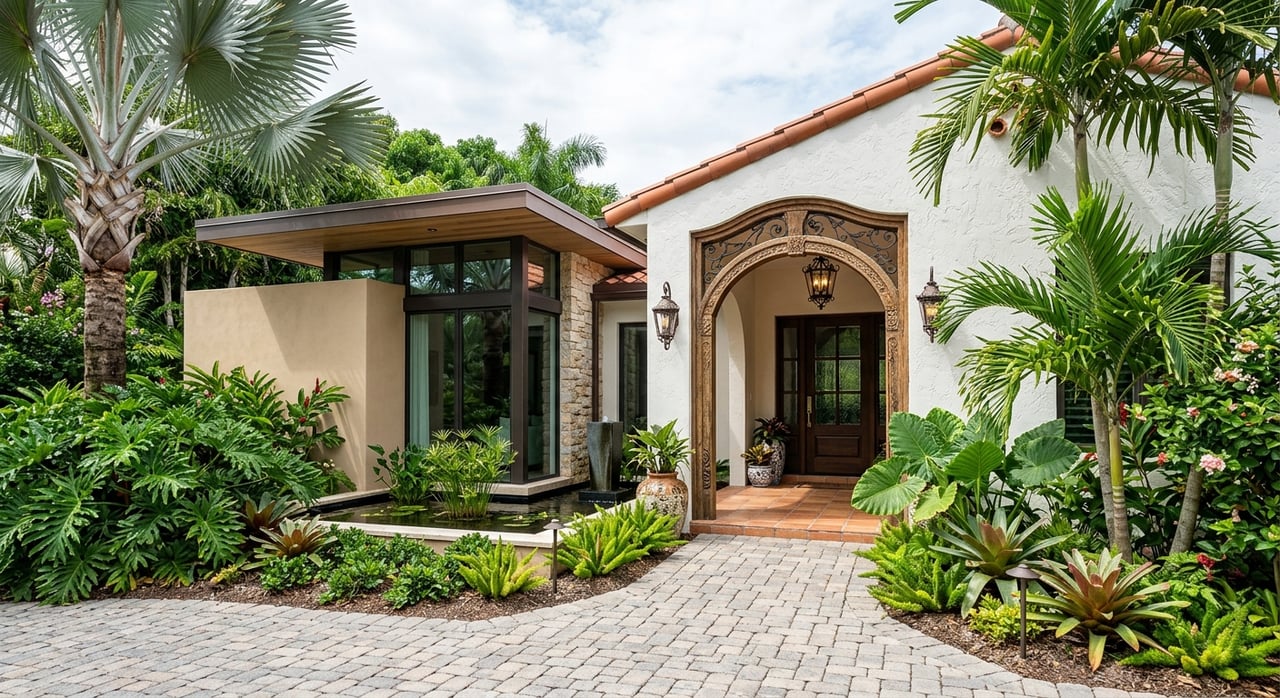
What makes Coconut Grove homes so memorable? It is not just one look or one era. In this part of Miami, architecture is shaped by history, climate, and landscape, which is why you will find everything from porch-forward Bahamian houses to arched Mediterranean Revival residences and relaxed tropical modern designs. If you are buying, selling, or simply trying to understand what gives Grove homes their identity, this guide will help you read the styles with more confidence. Let’s dive in.
Why Coconut Grove Style Stands Out
Coconut Grove is widely recognized as Miami’s oldest neighborhood, and its character comes from more than the homes alone. According to local neighborhood materials from Miami and Miami Beach, the area is defined by lush landscaping, natural vegetation, bay views, and historic structures.
That matters because in Coconut Grove, the setting is part of the architecture. Mature trees, green space, setbacks, porches, and terraces all shape the way a home looks from the street and how it lives day to day. The result is a neighborhood where curb appeal often depends as much on the site plan as on the façade itself.
Bahamian and Conch Roots
One of the most important architectural threads in Coconut Grove is the Bahamian, or Conch, house tradition. The City of Miami describes these homes in the Charles Avenue area as one-and-a-half or two-story rectangular residences with broad gabled or low hipped roofs, raised on posts or masonry piers, horizontal weatherboards, double-hung sash windows, and front porches that may wrap around the sides.
These homes are easy to recognize once you know what to look for. They tend to feel elevated, breezy, and porch-centered, with features that support ventilation and shade. City preservation guidance also notes details such as Bahamian-style shutters, light color palettes, and porch elements in wood or metal.
What Buyers Notice
When you tour a Bahamian or Conch-style home, you will often notice a strong connection between indoor and outdoor space. The porch is not just decorative. It is a functional part of the house, helping create shade, airflow, and a softer transition from the street to the interior.
For buyers, these homes often feel historic without being overly formal. For sellers, those porch details, original materials, and elevated form can become important talking points when presenting the home’s architectural story.
Bungalows Bring Modest Charm
Bungalows are another defining piece of Coconut Grove’s residential mix. Miami’s preservation glossary describes South Florida bungalows as one- or one-and-a-half-story wood-frame houses with deep porches, broad overhanging eaves, large sash windows, and simple ornament.
In practical terms, bungalow homes in the Grove often read as compact but full of personality. They usually have low rooflines, straightforward forms, and a casual indoor-outdoor flow that feels comfortable and approachable.
Key Bungalow Features
If you are scanning listings or walking a street in Coconut Grove, bungalow traits often include:
- One-story or one-and-a-half-story massing
- Low rooflines
- Wide eaves
- Deep porches
- Simple exterior detailing
- Materials such as weatherboards, wood shingles, or stucco
Because the detailing is restrained, the charm often comes from proportion and setting. A well-sited bungalow under a mature tree canopy can feel every bit as distinctive as a larger estate home.
Vernacular Homes Matter Too
Not every older Coconut Grove home fits neatly into a headline style. The City of Miami also identifies frame vernacular and masonry vernacular buildings, which are generally simpler and less decorated than bungalow or Mediterranean Revival homes.
These houses often have rectangular plans, basic gabled or hipped roofs, and minimal ornament. While they may not have the dramatic arches of a Mediterranean home or the deep bungalow eaves, they still contribute to the layered character that defines Coconut Grove.
Mediterranean Revival Defined a Boom Era
If you picture stucco walls, red tile roofs, arches, and wrought iron, you are likely thinking of Mediterranean Revival. Miami’s preservation office notes that this style helped define the city during the 1920s building boom and is marked by features such as stucco walls, red tile roofs, wood balconies, iron grilles or railings, arches, and courtyards or loggias in place of a traditional front porch.
In Coconut Grove, this style carries special local significance. The Florida Department of State identifies the Coconut Grove Playhouse as a Mediterranean Revival landmark, and state historic preservation material also recognizes El Jardin in Coconut Grove as the earliest known full-fledged Mediterranean Revival building in Miami.
How This Style Feels
Mediterranean Revival homes often feel more formal and composed than earlier vernacular or bungalow forms. Instead of a broad front porch, you may see a courtyard, loggia, or sheltered terrace. Instead of light wood cladding, you are more likely to see stucco, tile, and ornamental detailing.
For buyers, this style can feel timeless and expressive. For sellers, elements like arches, balconies, red tile roofing, and original decorative features often help frame the home as architecturally significant.
Mission and Spanish Influences
In Coconut Grove, you may also see homes described as Mission-style or Spanish-influenced. According to Miami’s preservation glossary, these buildings often feature stucco or oolitic limestone walls, tiled roofs, arches, low-pitch or flat roofs, curvilinear parapets, and restrained ornament.
This style language can overlap with Mediterranean Revival, but it often reads as a bit simpler. In listings, these homes may stand out for parapets, arched openings, and sheltered outdoor rooms rather than heavier decorative detail.
Tropical Modern Fits the Climate
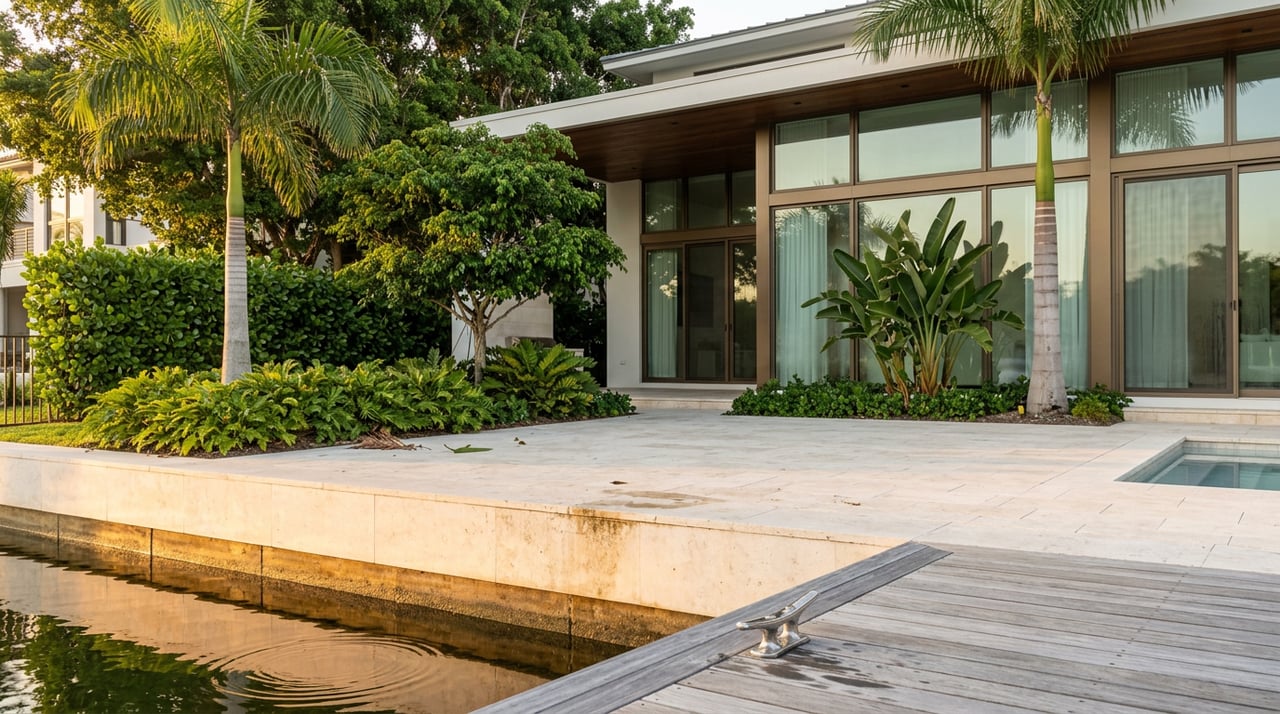
Coconut Grove is also known for a more relaxed modern expression that responds to South Florida living. While tropical modern is not listed as a single formal category in Miami’s historic glossary, Village West design guidance supports the ideas that define it: light colors, porches, outdoor circulation, self-shading, natural ventilation, and design choices that reduce dependence on air conditioning.
This climate-aware approach also aligns with the National Park Service description of the Florida Tropical House concept, which emphasizes blending indoor and outdoor space through open terraces and spacious living areas.
What Tropical Modern Looks Like
In Coconut Grove listings, tropical modern homes are often the ones with:
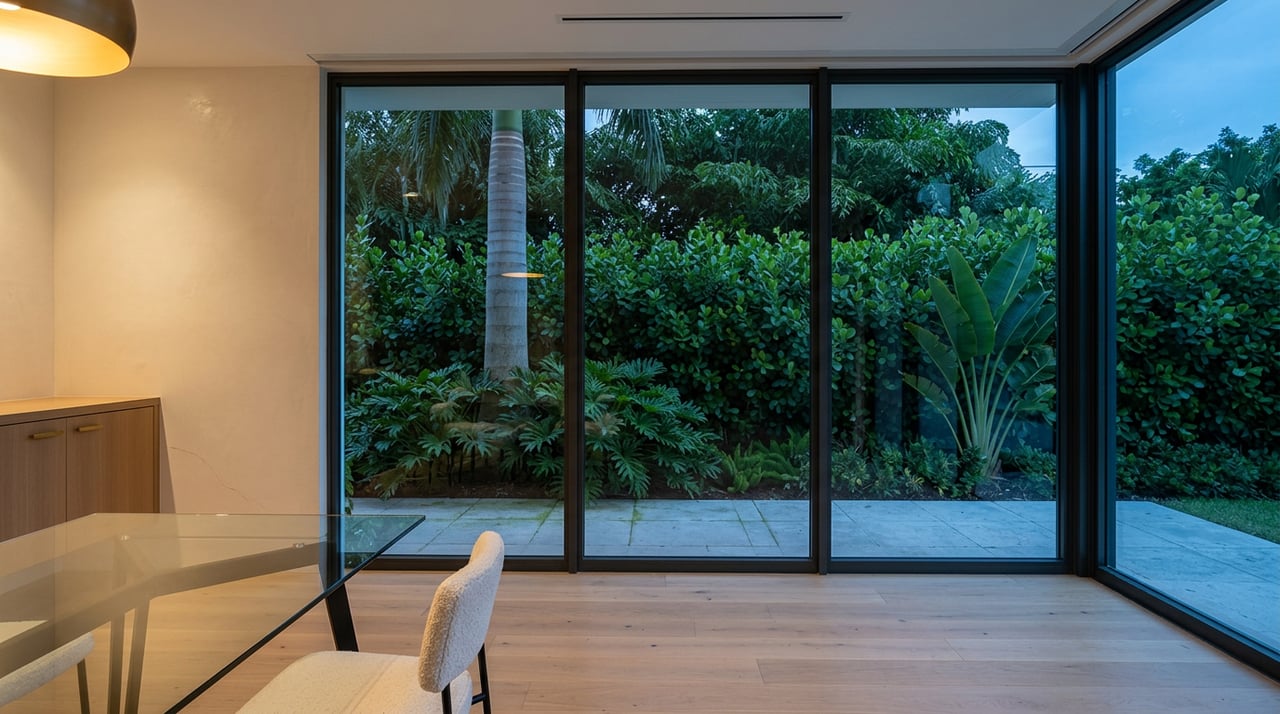
- Broad glass walls
- Deep roof overhangs
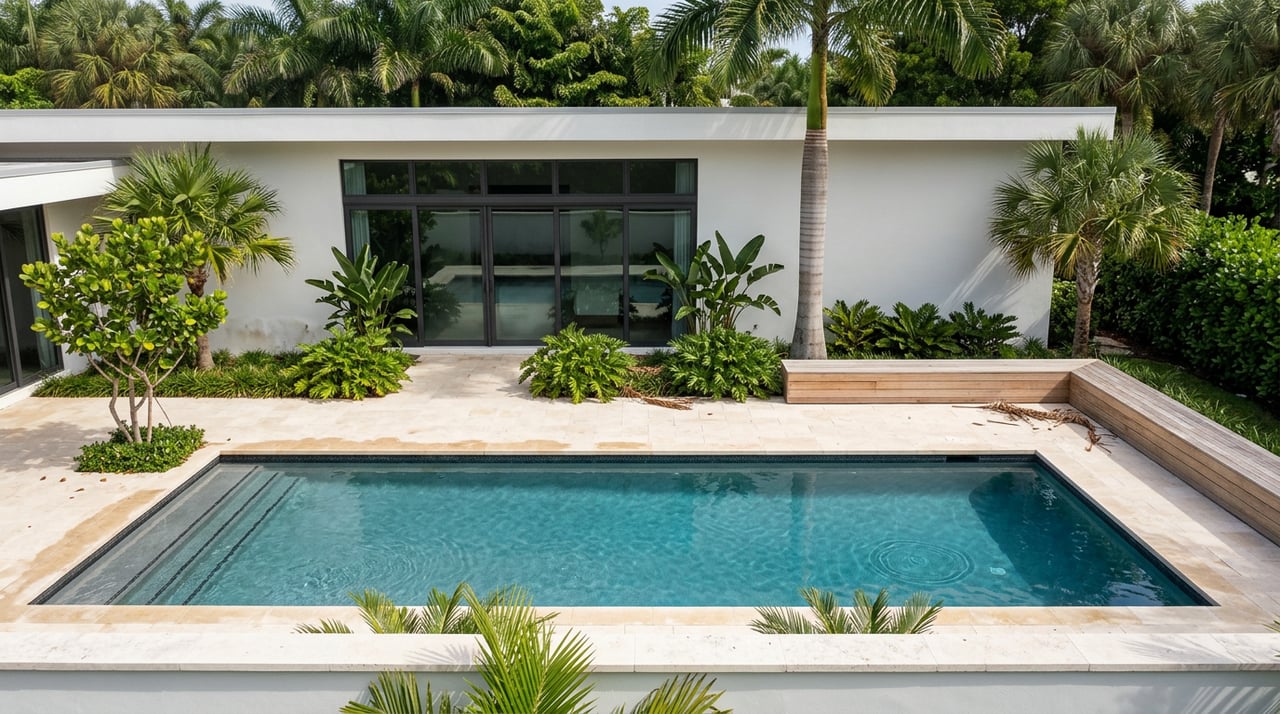
- Flat or low-slung rooflines
- Open-air verandas or terraces
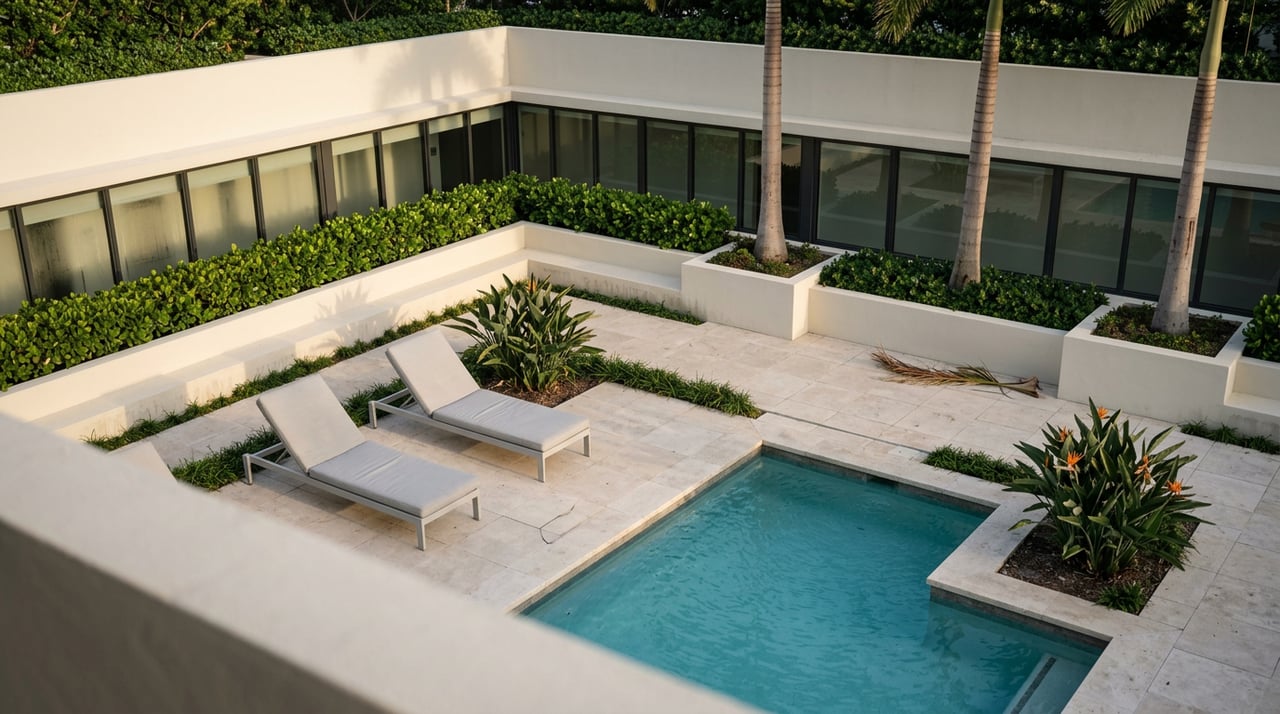
- A strong relationship to landscaping and shade
- Minimal exterior ornament
Compared with a Mediterranean Revival house, tropical modern usually feels less formal and more resort-like. The landscaping, light, and flow between rooms and outdoor areas often do as much of the visual work as the architecture itself.
Miami Modern Adds a Postwar Layer
Another modern chapter appears in Miami Modern, often called MiMo. Miami’s preservation glossary describes this postwar style as evolving from Art Deco and Streamline Moderne, with features such as geometric patterns, curves, kidney and oval forms, cast concrete panels, nautical motifs, overhanging roof plates, open-air verandas, and projecting floor slabs.
Some Grove homes and buildings may reflect parts of that vocabulary, even when they are not textbook examples. Rounded edges, horizontal emphasis, open-air circulation, and playful modern details can all hint at this era.
How to Read a Coconut Grove Listing
If you are trying to decode listing language, this quick guide can help.
Conch or Bahamian
Look for raised floors, shutters, weatherboards, and deep or wraparound porches. These homes usually feel open, breathable, and tied to early Caribbean building traditions.
Bungalow
Look for smaller scale, low rooflines, wide eaves, and a deep porch. Bungalows tend to offer simple lines and strong character without heavy ornament.
Mediterranean Revival
Look for stucco, arches, red tile roofs, wrought iron, courtyards, and loggias. These homes often feel more formal and architecturally expressive.
Mission or Spanish-Influenced
Look for parapets, arches, tiled roofs, and simpler stucco surfaces. These homes can share features with Mediterranean Revival while presenting a more restrained look.
Tropical Modern or MiMo
Look for broad glass, flat or low roof forms, projecting slabs, verandas, and strong indoor-outdoor flow. Shade, trees, and terraces are often central to the experience.
Landscape Is Part of the Architecture
One of the biggest mistakes people make is judging Coconut Grove homes by the house alone. Preservation and neighborhood guidance consistently show that the Grove’s identity includes the tree canopy, green space, porches, terraces, and the way homes sit on their lots.
That is why two homes with very different architectural styles can still feel equally “Grove.” The common thread is often how they respond to the climate and landscape, not just the materials or ornament on the front elevation.
Why Style Knowledge Helps Buyers and Sellers
If you are buying in Coconut Grove, understanding these styles helps you look beyond surface finishes. You can better recognize what makes a home historically rooted, climate-responsive, or architecturally distinct.
If you are selling, style literacy helps you market the property more effectively. Instead of using generic language, you can highlight the home’s true architectural identity, whether that means a wraparound porch, a loggia, a red tile roof, or a tropical modern connection to outdoor living.
In a neighborhood as layered as Coconut Grove, that context matters. It helps buyers understand what they are seeing and why a home feels the way it does.
If you are thinking about buying or selling in Coconut Grove, working with a team that understands both architecture and neighborhood context can make a real difference. The Miami Signature Homes offers senior-level guidance, local market insight, and a tailored approach to presenting homes with care and clarity.
FAQs
What architectural styles are most common in Coconut Grove homes?
- Coconut Grove is known for a layered mix of Bahamian or Conch houses, bungalows, vernacular homes, Mediterranean Revival, Mission or Spanish-influenced homes, and later tropical modern or MiMo-inspired designs.
What defines a Bahamian or Conch-style home in Coconut Grove?
- These homes are typically raised, rectangular, and porch-forward, with gabled or low hipped roofs, weatherboards, shutters, double-hung windows, and design features that support shade and ventilation.
What makes Mediterranean Revival homes in Coconut Grove distinctive?
- Mediterranean Revival homes often feature stucco walls, red tile roofs, arches, wrought iron, balconies, courtyards, and loggias, creating a more formal look than earlier vernacular styles.
How can you identify a bungalow in Coconut Grove?
- A Coconut Grove bungalow usually has one or one-and-a-half stories, a low roofline, broad eaves, a deep porch, and simple detailing with a modest but character-rich appearance.
Why is landscaping so important to Coconut Grove architecture?
- Local guidance describes Coconut Grove’s identity as closely tied to lush vegetation, mature trees, green space, porches, terraces, and the way homes relate to their sites, so the landscape is a key part of the neighborhood’s visual character.