Wondering whether a guesthouse, detached studio, or in-law setup makes sense in Pinecrest? You are not alone. In a market known for single-family homes, larger lots, and long-term ownership, flexible accessory spaces often come up when families want more privacy, room for relatives, or a better work-from-home setup. This guide will help you understand how multigenerational living fits Pinecrest, what local rules may affect your options, and what to think through before you buy or sell a home with this kind of space. Let’s dive in.
Why Pinecrest Fits Flexible Living
Pinecrest’s housing pattern helps explain why guesthouses and multigenerational layouts are such a natural topic here. The village has about 18,388 residents across roughly 7.45 square miles, and Census QuickFacts and village data show an owner-occupied housing rate of 82.8%, a median household income of $206,417, and 3.03 persons per household.
Those numbers point to a community where many households stay put, invest in their homes, and look for layouts that can adapt over time. If you need space for extended family, occasional guests, remote work, or a private hobby area, Pinecrest’s predominantly single-family setting makes those needs especially relevant.
The village’s Comprehensive Development Master Plan also shows that low-density residential designations play a major role in local land use. In practical terms, that means detached accessory spaces may be more realistic on larger lots than on smaller parcels.
What “Guesthouse” Can Mean
One of the most important first steps is getting clear on the vocabulary. People often use terms like guesthouse, ADU, in-law suite, studio, and detached office interchangeably, but local and regional rules may treat them differently.
According to Miami-Dade County’s ADU and guesthouse guidance, an ADU is generally a separate ancillary residential unit with a kitchen, bathroom, and sleeping area. A guesthouse, by contrast, is intended for the occupants of the main dwelling and their family, and it is not rented for a fee.
That distinction matters because future use, utility setup, occupancy, and marketing can all depend on which category applies. Since Pinecrest is an incorporated village with its own review process, county guidance is helpful background, but you should not assume it automatically governs a property in Pinecrest.
Pinecrest Rules to Know First
Before you make plans for a detached structure or conversion, it helps to know that these projects are usually reviewed on more than one level. In Pinecrest, a guesthouse or similar space is often both a construction issue and a land-use issue.
The village’s permit FAQ says permits are typically required for new construction, additions, garage or shed work, and projects that enlarge, convert, or build garages or carports. If your plans change a structure’s dimensions or appearance, design review may also come into play.
Pinecrest’s site plan review page goes even further, stating that permitted, conditional, and accessory uses require site plan approval unless specifically exempted. It also says no structure or parking area may be erected or used without an approved site plan.
If a proposal does not conform to local planning code, a variance may be required. That is why it is smart to verify the rules early, especially before you buy a home based on the assumption that you can add or convert space later.
Multigenerational Living Use Cases
In Pinecrest, the most practical way to think about accessory space is by daily use. The question is less about labels and more about how the space will actually support your household.
Extended Family Space
For households planning multigenerational living, a detached or semi-private space can provide needed separation while keeping everyone on the same property. That may mean room for visiting relatives, long-term family support, or a more flexible household setup that can change over time.
Guest Accommodations
Some buyers want extra space for occasional overnight guests without giving up privacy in the main house. In that case, a guesthouse-style arrangement may be appealing, but it is still important to confirm how the village classifies and regulates the space.
Remote Work or Creative Use
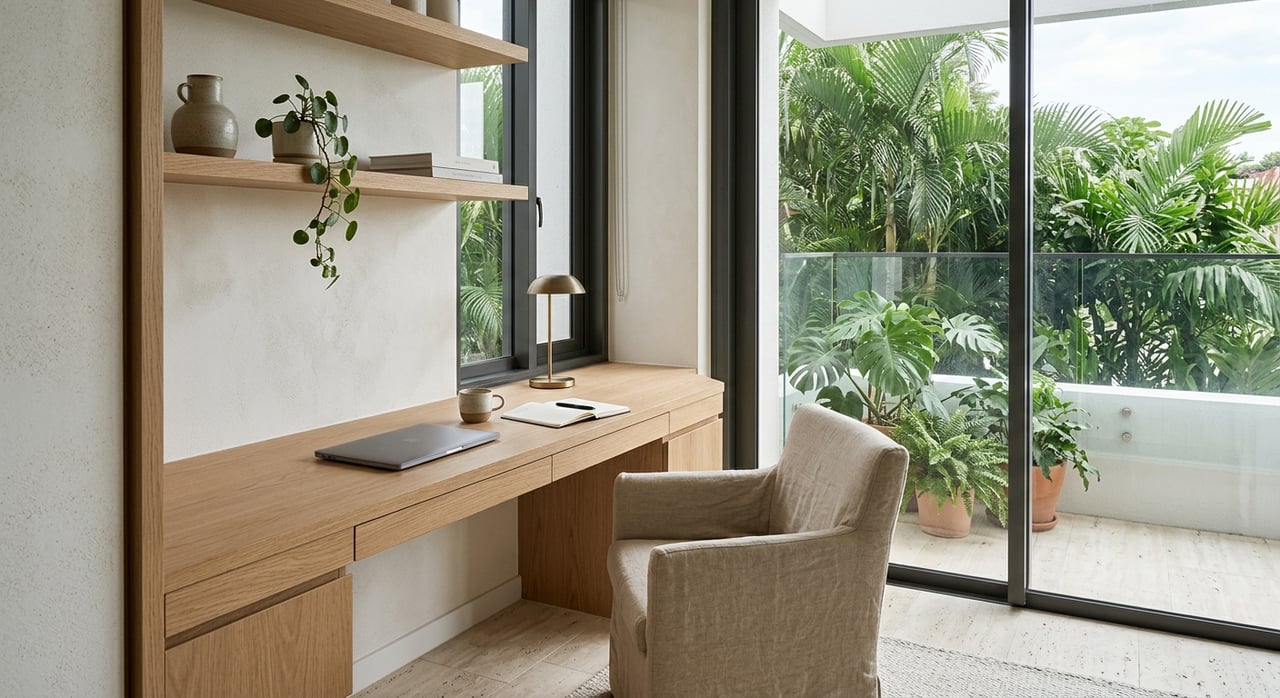
Pinecrest specifically recognizes home offices as an accessory use. The village says a home office must remain clearly secondary to the residential use, cannot change the outside appearance of the property, cannot create extra traffic or outside storage, limits nonresident workers, and requires a local business tax receipt.
That makes a detached studio especially attractive when your goal is a quiet office, design room, or creative retreat rather than a full independent residence. In many cases, that distinction can shape what is possible on a given property.
Design Priorities That Matter
Even when a detached space is allowed, good design still matters. In Pinecrest, compatibility is a recurring theme in local review standards.
The village’s site plan review standards focus on whether a project fits its surroundings, and Miami-Dade’s regional guidance also emphasizes compatible appearance, setback compliance, and parking management. In plain language, the accessory space should feel secondary to the main house rather than like a competing second home.
Here are a few practical design points to think through:
- Placement: Where will the structure sit on the lot, and how visible will it be from the street?
- Privacy: How will entrances, windows, and outdoor areas affect sightlines between the main house and the accessory space?
- Parking: Will the layout support day-to-day parking needs without creating congestion?
- Access: Will family members or guests move through the property in a way that feels natural and respectful of privacy?
- Appearance: Does the design feel consistent with the primary residence?
These details matter both for livability and for the approval process.
Rental Questions Need Careful Review
A common question is whether a guesthouse or detached suite can generate income. In Pinecrest, that is not something to assume.
The village’s vacation rental rules require properties used as vacation rentals to register, renew annually, and undergo compliance inspections. That is a different regulatory path from a private family guest space or a detached office.
Regional guidance also draws a clear line between a guesthouse intended for the main household and family use, and an ADU that may function as a more independent unit. If rental use is part of your plan, confirm the category and restrictions before you market the property, buy with income expectations, or commit to a renovation budget.
What Buyers Should Look For
If you are shopping for a home in Pinecrest with multigenerational potential, it helps to go beyond the listing description. A detached structure may look ideal at first glance, but the real question is whether its existing or intended use aligns with local review standards.
As you evaluate a property, consider asking:
- Is the space already permitted for its current use?
- Is it best described as a guesthouse, studio, office, or something else?
- Does the lot size and layout support the structure comfortably?
- Would future changes likely need permits, site plan approval, or a variance?
- Are there any private restrictions, such as HOA rules or deed covenants?
Pinecrest and Miami-Dade materials both note that private covenants and association documents may still restrict use, even if a structure otherwise appears possible from a zoning standpoint.
What Sellers Should Highlight
If you are selling a Pinecrest home with a guesthouse, detached studio, or flexible family layout, clarity matters. Buyers are often drawn to these spaces because they solve real-life needs, but they also want confidence about what the space is and how it can be used.
The strongest marketing approach is usually factual and specific. Instead of making broad promises about rental potential or future occupancy, it is better to present the space based on verified features, current use, and the property’s overall layout.
For example, buyers may respond well to features like:
- Separate privacy for guests or extended family
- A detached workspace for remote work
- Flexible bonus space for hobbies or creative use
- A layout that supports changing household needs over time
That kind of positioning is especially effective in Pinecrest, where buyers often value long-term functionality as much as square footage.
Why Local Guidance Matters
In a village like Pinecrest, details matter. The difference between a smooth transaction and a frustrating one often comes down to understanding how a property fits local rules before you make assumptions.
Whether you are buying for multigenerational living or preparing to sell a home with an accessory structure, the goal is the same: understand the property clearly, present it accurately, and make decisions with the right local context. That is where experienced, neighborhood-specific guidance can make a real difference.
If you are exploring a Pinecrest home with a guesthouse, detached studio, or flexible family layout, The Miami Signature Homes can help you evaluate the property, position it thoughtfully, and move forward with confidence.
FAQs
What does guesthouse mean in Pinecrest real estate?
- In regional usage, a guesthouse generally refers to a space for the occupants of the main home and their family, not a unit rented for a fee, but Pinecrest owners should verify how their specific property and plans are classified.
Do guesthouses in Pinecrest require permits or approvals?
- Yes, Pinecrest states that new construction, additions, garage work, and many conversions typically require permits, and accessory uses generally require site plan approval unless specifically exempted.
Can you rent out a guesthouse in Pinecrest?
- Rental use should be verified carefully because Pinecrest regulates vacation rentals separately, and county guidance distinguishes between family-use guesthouses and more independent accessory dwelling units.
Are detached offices allowed in Pinecrest homes?
- Pinecrest recognizes home offices as an accessory use, but they must remain secondary to the residence, cannot change the exterior appearance, cannot add outside storage or extra traffic, and require a local business tax receipt.
What should buyers check before buying a Pinecrest home with a detached structure?
- Buyers should confirm the space’s current legal use, whether permits or approvals were obtained, whether future changes may require site plan review or a variance, and whether any HOA or deed restrictions apply.