Is Miami Really More Expensive Than New York Now?
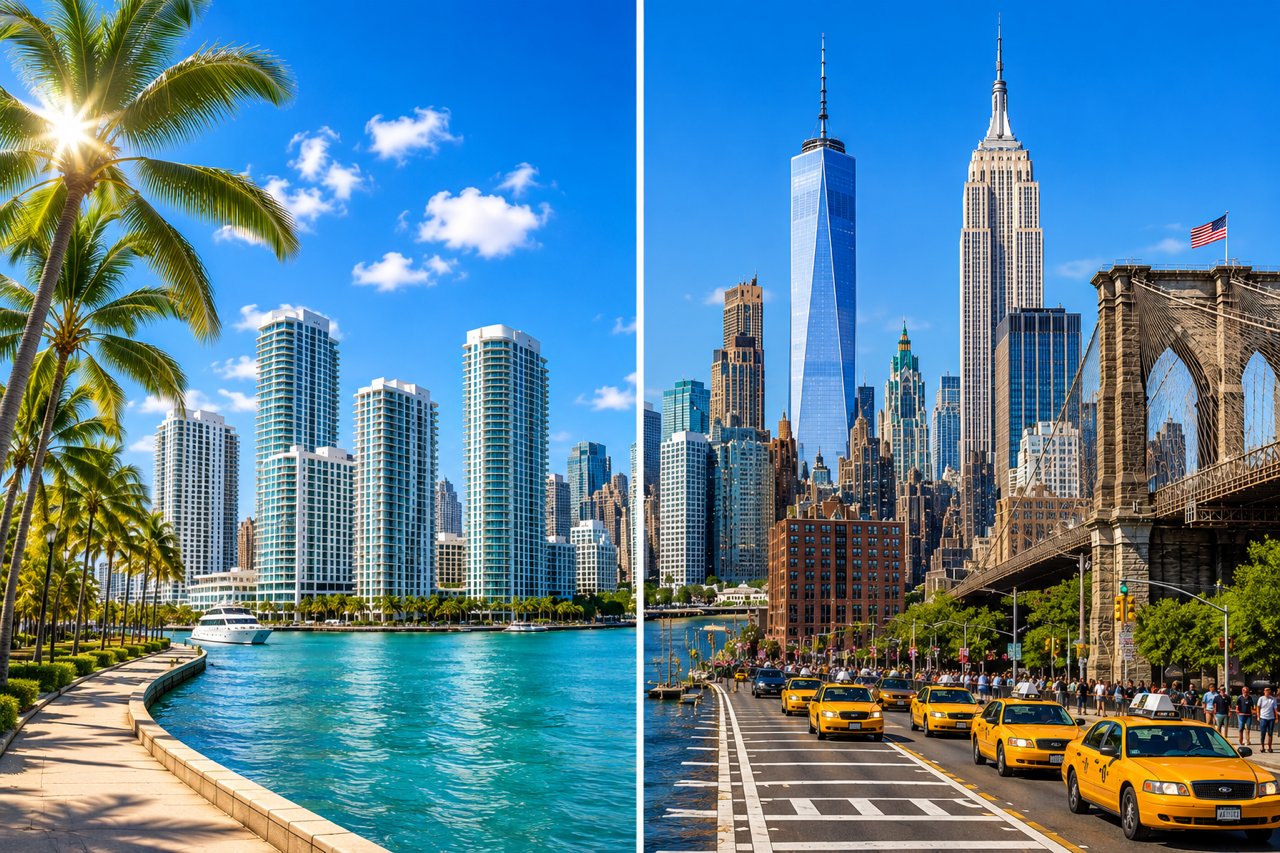
Recent federal data is putting Miami’s rising cost of living into sharper focus, as for the first time on record, according to the latest Regional Price Parities data from the U.S. Bureau of Economic Analysis, the Miami-Fort Lauderdale-West Palm Beach metropolitan area has surpassed the New York-Newark-Jersey City metro area in overall price levels.
The comparison does not mean every part of Miami is more expensive than New York City. The data measures two large metropolitan areas and accounts for the broader cost of housing, goods, services, and other expenses across each region. Still, the shift reflects how significantly South Florida has changed, with housing and ownership costs playing an important role in Miami’s higher overall price level.
For Miami luxury real estate agent Mauricio Barba, the data reinforces a transition that has been developing for years. Miami has established itself as a global luxury market, attracting buyers who see South Florida as a destination for business, investment, and long-term ownership.
For luxury buyers, evaluating a property now involves the complete financial picture of ownership. Location, property quality, insurance, taxes, maintenance, and long-term value all factor into the decision. Understanding the nuances of individual neighborhoods has also become increasingly important as Miami’s cost profile continues to change.
Miami’s Rise as a Global Luxury Market
Miami’s luxury market has evolved considerably over the past several years. Continued wealth migration, business growth, international investment, and demand for the South Florida lifestyle have brought new buyers and capital into the region. During that period, costs have also risen significantly. Consumer prices in the Miami metropolitan area have reportedly increased 36% since 2019, while home prices have climbed 79%.
Rising costs can be seen across housing, insurance, dining, education, and everyday services, reflecting the broader transformation taking place across South Florida.
For the luxury market, this evolution has changed how buyers approach Miami real estate. Buyers are evaluating properties with a greater focus on quality, location, lifestyle, and long-term value. Desirable neighborhoods, waterfront access, limited inventory, and distinctive homes continue to command attention, particularly when the property offers characteristics that are difficult to replicate.
Miami’s position today reflects a market that has developed its own identity, with buyers choosing South Florida for what it offers, from established luxury communities and waterfront living to business opportunities, international connectivity, and a year-round lifestyle.
What does “more expensive than New York” actually mean?
The idea that Miami is now “more expensive than New York” requires context, as the comparison comes from the U.S. Bureau of Economic Analysis’ Regional Price Parities, which measure how price levels for housing, goods, and services across metropolitan areas relate to the national average.
The latest data placed the Miami-Fort Lauderdale-West Palm Beach metropolitan area above the New York-Newark-Jersey City metropolitan area. The distinction matters because the figures compare two broad regions rather than the City of Miami directly with Manhattan.
Housing plays a significant role in Miami’s overall cost profile, with home values rising substantially in recent years while homeowners insurance, property-related expenses, and other ownership costs have also increased, alongside private school tuition, dining, services, and other lifestyle expenses that contribute to the broader cost of living throughout South Florida.
For homeowners and luxury buyers, evaluating a property includes the full range of ownership expenses. Insurance, property taxes, maintenance, association fees where applicable, and other ongoing costs can all influence the long-term financial picture.
Florida’s lack of a state individual income tax also remains part of the equation, particularly for some high-income households. The actual financial impact of living in South Florida therefore depends on each buyer’s income, property, lifestyle, and long-term plans.
Housing has changed Miami’s position among global cities
Housing has been one of the primary forces behind Miami’s changing cost profile, as strong demand and rising home values have increased housing expenses throughout South Florida while insurance, property taxes, maintenance, and other ownership costs have become a larger consideration for buyers.
In the luxury segment, property characteristics continue to play an important role in buyer interest. Prime neighborhoods, waterfront access, architectural quality, privacy, amenities, and lifestyle considerations all influence how individual properties are positioned and valued.
This environment makes property selection increasingly specific, as two homes within the same general price range can present very different ownership costs, lifestyle benefits, and long-term opportunities depending on their location, condition, features, and neighborhood dynamics.
For buyers, understanding those differences is an essential part of making a well-informed purchase.
What this means for Miami homeowners and sellers
Miami’s higher cost position reinforces how much the market has evolved, but rising costs throughout the region do not automatically translate into a higher value for every property.
Today’s buyers are informed and selective, paying close attention to location, condition, recent comparable sales, insurance considerations, ongoing ownership expenses, and the characteristics that distinguish one property from another.
Homes that are well located, carefully maintained, thoughtfully updated, or offer features that are difficult to replicate are positioned to attract serious attention. Presentation and pricing also remain important, particularly as buyers evaluate the complete value proposition of a property.
For sellers, this makes a property-specific strategy essential. Recent sales, neighborhood activity, current competition, condition, improvements, lot characteristics, amenities, and buyer expectations all influence how a home should be positioned.
A well-informed pricing strategy reflects what is happening in the market today while accounting for the qualities that make an individual property valuable. As Miami continues to mature as a luxury market, sellers who understand those dynamics are better positioned to approach the market with clarity.
What Miami Luxury Realtor Mauricio Barba Sees Ahead
“Miami is no longer being evaluated as the less expensive alternative to New York. Buyers now compare it with the world’s leading luxury markets, and that raises expectations. Now more than ever, it’s important to work with a realtor who has experienced various market cycles and can navigate not just the current market, but the future.” - Mauricio Barba.
Miami’s current position reflects years of sustained demand, investment, wealth migration, and growing interest in South Florida as a destination for business, real estate, and lifestyle. The market has evolved significantly, and so have the expectations of the buyers and sellers participating in it.
Looking ahead, Miami real estate remains highly local. Each neighborhood has its own market dynamics, and every property brings a different combination of characteristics, expenses, and long-term considerations. Experienced local insight can help buyers and sellers understand how those factors influence value.
For buyers, understanding the full cost and value of ownership can help identify properties that align with both lifestyle and financial goals. For sellers, knowing how a home fits within its specific market can help guide pricing, positioning, and timing.
With decades of experience in Miami real estate, Mauricio Barba and his team provide the market knowledge, local perspective, and 24/7 white-glove service that help clients understand the opportunities and considerations surrounding each transaction.
If you’re considering your next move in Miami, contact Mauricio Barba at 305-439-8311 to discuss your real estate goals.
Private consultations by appointment.