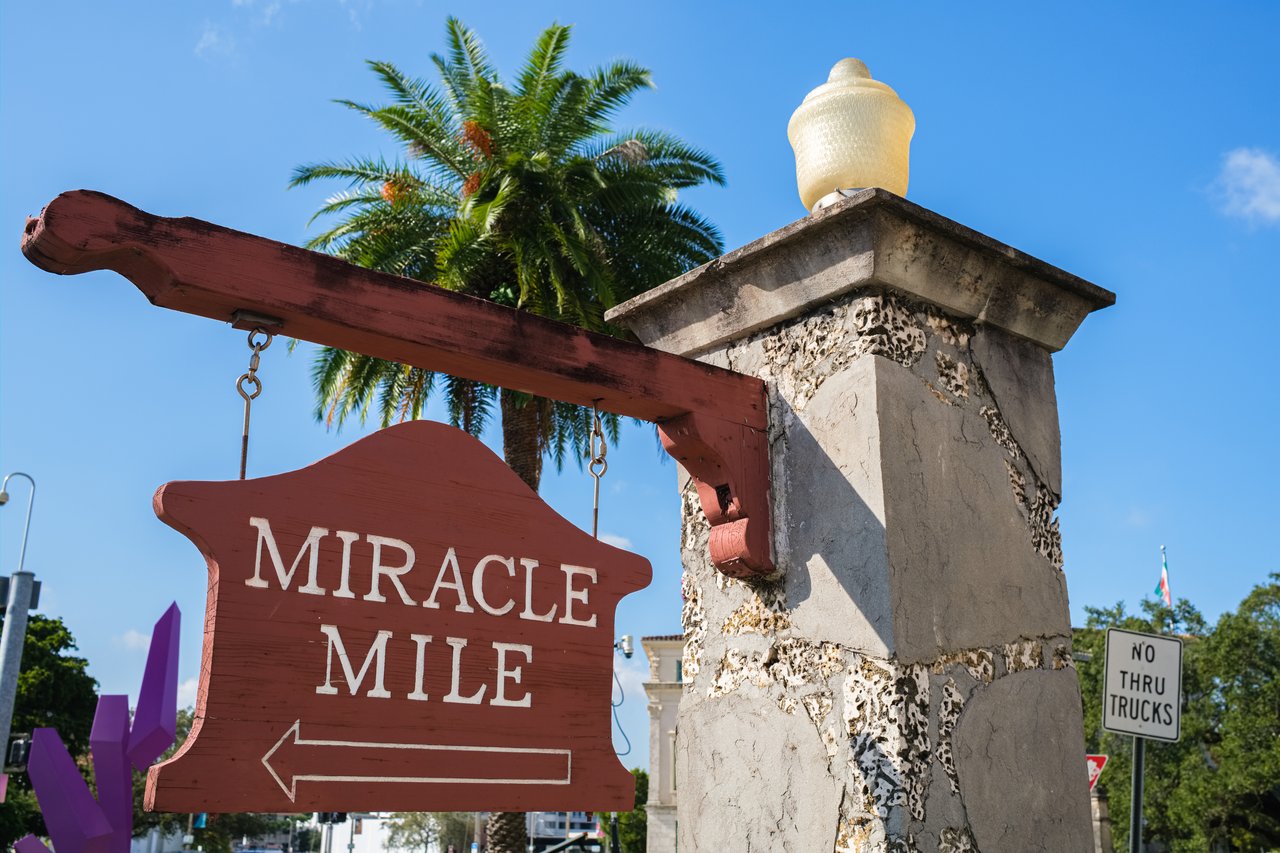
Walk through downtown Coral Gables around midday this month and you'll pass storefronts that didn't exist as restaurants a year ago. That alone isn't unusual. What's unusual is what they're built for. This isn't another wave of white-tablecloth dinner rooms angling for anniversary bookings. It's lunch counters, sandwich shops, and a food hall built for the kind of visit you make on a Tuesday without a reservation.
That's the actual story here, and it's bigger than any single opening. Coral Gables built its reputation on the evening reservation, the kind of dinner you plan around. What's shifting this year is the daytime, with more dining options at noon.
More Options Beyond Dinner
For most of the past decade, the muscle memory in the Gables ran one direction: if you wanted a serious meal, you booked a table for dinner. Zucca, the Da Silva family's Italian dining room on Alcazar Avenue, has run that playbook since 2017, building a following on an award-winning wine list and the kind of evening that stretches past dessert. It's still doing exactly that. But the neighborhood around it is filling in with something Zucca was never built to be: fast, casual, and open at noon.
A few names worth knowing if you haven't been paying attention:
- Stand, the casual spin-off from Coral Gables' Michelin-starred Shingo, launched as part of this year's Taste the Gables promotion, giving the neighborhood's most exacting kitchen a version built for a faster visit.
- Buccan Sandwich Shop, a Palm Beach import, opened in Coral Gables this summer, sparing regulars the drive north for a sandwich they used to plan a day trip around.
- Casa MX, a 150-seat Mexico City tribute from chef Kevin Acosta and owner Mario Bernal, opened January 24 inside a converted 2,800-square-foot residence at 2345 SW 37th Avenue, proof that a former house can become a full dining room without pretending to be a fine-dining destination.
- Casa Vialetto, the rebuilt successor to Caffe Vialetto after its 26-year run closed in August 2025, reopened this year on Alhambra Circle in a smaller room built around 45 to 50 seats instead of chasing its old footprint.
None of these are trying to be the next Zucca. That's the point.
The Same Family Is Betting Against Its Own Formula
The clearest signal isn't any of the newcomers above. It's what the Da Silva family is doing to itself.
The group that spent nine years building Zucca into a reservation-only fixture is now opening Zuccaly, an 8,000-square-foot Italian food hall at Plaza Coral Gables on Palermo Avenue, in the same downtown core as the original restaurant. It seats 200 across six stations: a Roman-style pizza al taglio counter, a pasta and risotto line, a live-wood grill, a market stocked with prepared foods like wagyu carpaccio and fresh burrata, a salad station, and a dessert counter. There's a weekday two-for-one happy hour built into the concept from day one, something no one would have pitched for Zucca's dining room.
In a Miami New Times report, Erasmo da Silva, who leads the family's hospitality group, described the new concept this way:
"Something for everyone who loves Italian food but wants a more casual, comfortable, less formal setting."
That's not marketing copy dressed up as insight. It's the operator who knows the neighborhood's numbers better than anyone else deciding the next move isn't another version of what already works. According to the most recent announcement from Da Silva Hospitality, Zuccaly is expected to create roughly 120 new local jobs once it opens, a scale that reads less like a restaurant launch and more like a bet on a different kind of daily traffic. As of the most recent local reporting, no firm opening date had been confirmed, which tells you something too. A food hall this size doesn't get built on a whim, and the wait itself has become part of how the neighborhood is talking about it.
What Actually Changes On A Tuesday
If you live in the Gables, the practical shift is smaller than the headlines but easier to feel. Last month's Taste the Gables promotion pulled in more than 75 participating restaurants across the city, a number that says less about any one opening and more about how much dining density this neighborhood can absorb without repeating itself. What's new this year is that a meaningful slice of that density is built for the middle of the day as well as the evening.
That matters for anyone whose week doesn't revolve around dinner reservations. A sandwich counter with a fast line. A food hall with a happy hour that starts before five. A converted house serving lunch instead of only booking out dinner service weeks in advance. These options build on what the Gables has always done well, adding more places to eat at noon alongside its established evening dining.
More Ways To Fill The Calendar
The food isn't the only part of daily life in the Gables recalibrating toward the everyday. The city's public calendar shows the same pattern.
Gables Gallery Night runs the first Friday of every month, 6 to 10 p.m., paired with live music at Giralda Live from 7 to 11 p.m., a standing ritual rather than a special occasion. Giralda Plaza itself has spent the summer under an installation called Cielo Tejido, a canopy of handwoven textiles from artisans in Etzatlán, Mexico, that stayed up through July 31. Its replacement, Giralda in Bloom, debuts with a ribbon-cutting on August 14, which means anyone walking the plaza this week will see the sky over it change mid-stroll.
Two days after that, on August 16, Gables Bike Tours, a monthly partnership between BikeWalk Coral Gables and the Coral Gables Museum, heads out to Montgomery Botanical Center. It's a $10 ticket, a museum-led ride, and one more example of programming built around a regular Tuesday-through-Sunday life rather than a single marquee event.
None of these are large individually. Together they describe a neighborhood investing in its own in-between hours, the same instinct showing up in Zuccaly's happy hour and Casa MX's lunch service. Coral Gables spent years perfecting the special occasion. What's new is the attention going into the ordinary week around it.
What This Means If You're Watching The Neighborhood Closely
None of this is a market signal in the traditional sense. It's something quieter: a read on where a neighborhood is investing its energy when nobody's asking it to. A family that built its name on formal dinner service choosing to bet on lunch and happy hour tells you more about where Coral Gables is heading than any single restaurant opening could on its own.
If you're already living here, this is the kind of shift that shows up slowly and then all at once, in shorter lines, longer lunch hours, and a Tuesday with more places to go. If you're thinking about what a home in this neighborhood is actually worth, in lifestyle terms and not just square footage, these are the details that don't show up in a listing description but shape how a street actually feels to live on.
Miami Signature Homes spends as much time walking these blocks as we do reviewing comps on them. If you're curious what a home in this stretch of Coral Gables might be worth, schedule a private consultation & complimentary home valuation and we'll walk you through it, corridor by corridor.